If you don’t know how search engines actually work, check out this Google-produced video: How Google Works.

Keep up with what we're thinking, reading, and doing.
If you don’t know how search engines actually work, check out this Google-produced video: How Google Works.
Google announced another update to the search engine results pages. They’re now including information about a result’s location in a site’s hierarchy, rather than merely showing the page’s URL.
Here’s an example of what the new results will look like. The new feature isn’t yet live for everyone but Google says we’ll all see this feature within the next few days.

So what does this have to do with using a content management system (CMS)?
Well, if your site has many pages, providing the search user with context about the page they’re considering clicking might actually help convince them to click on your listing. Or, they may see that they really want to click on the listing’s parent page or category.
Using a CMS can help you ensure that the websites you maintain and/or build are structured in a way that Google can easily decipher site organization. Tweak CMS, for example, uses a parent-child organizational structure to ensure that your site fully leverages the sitemaps protocol (very helpful for SEO) as well as providing an automated method for generating breadcrumb (crumbtrail) navigation. Google’s announcement indicates that breadcrumb navigation is a key factor in determining whether they can include this new feature on a given site’s listing.
As you know, Agency Fusion offers a content management system (CMS), that resellers can brand as their own and resell to their clients for a profit.
When resellers ask us for tips on persuading more clients to purchase a CMS, we’re usually quick to mention the benefits of having fresh content on a site. Our friends at SEO.com have a nice write-up, including some good visuals, that help illustrate just how important fresh content is from an SEO standpoint.
Here’s a graph from the article showing a drop in organic search traffic as a result of letting content go stale for 4 months:
Check out the full article here.
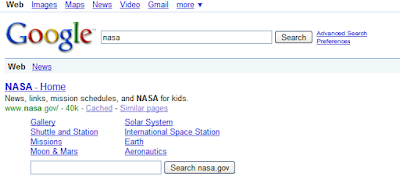
The Google Webmaster blog recently featured a post announcing an update to their sitelink feature. If you’re not yet familiar with sitelinks, they’re the links shown below a search engine result (usually the first one) like this:
SEO.com has a great post about using FAQ pages to help boost organic search. Apparently they’ve tested the technique and had good results. I’ve yet to try it out but it seems logical that it would work well for one very big reason: the average person creates search queries that are very similar in form to the questions on FAQ pages. This means their queries are likely to match with keywords and phrases on your FAQ page.
Using an FAQ page for SEO also gives you an opportunity to optimize for additional keywords that you haven’t used in other areas of your site.
On the topic of search query formation, you should learn more about natural language search engines like Powerset. This is where many people believe search needs to evolve to.